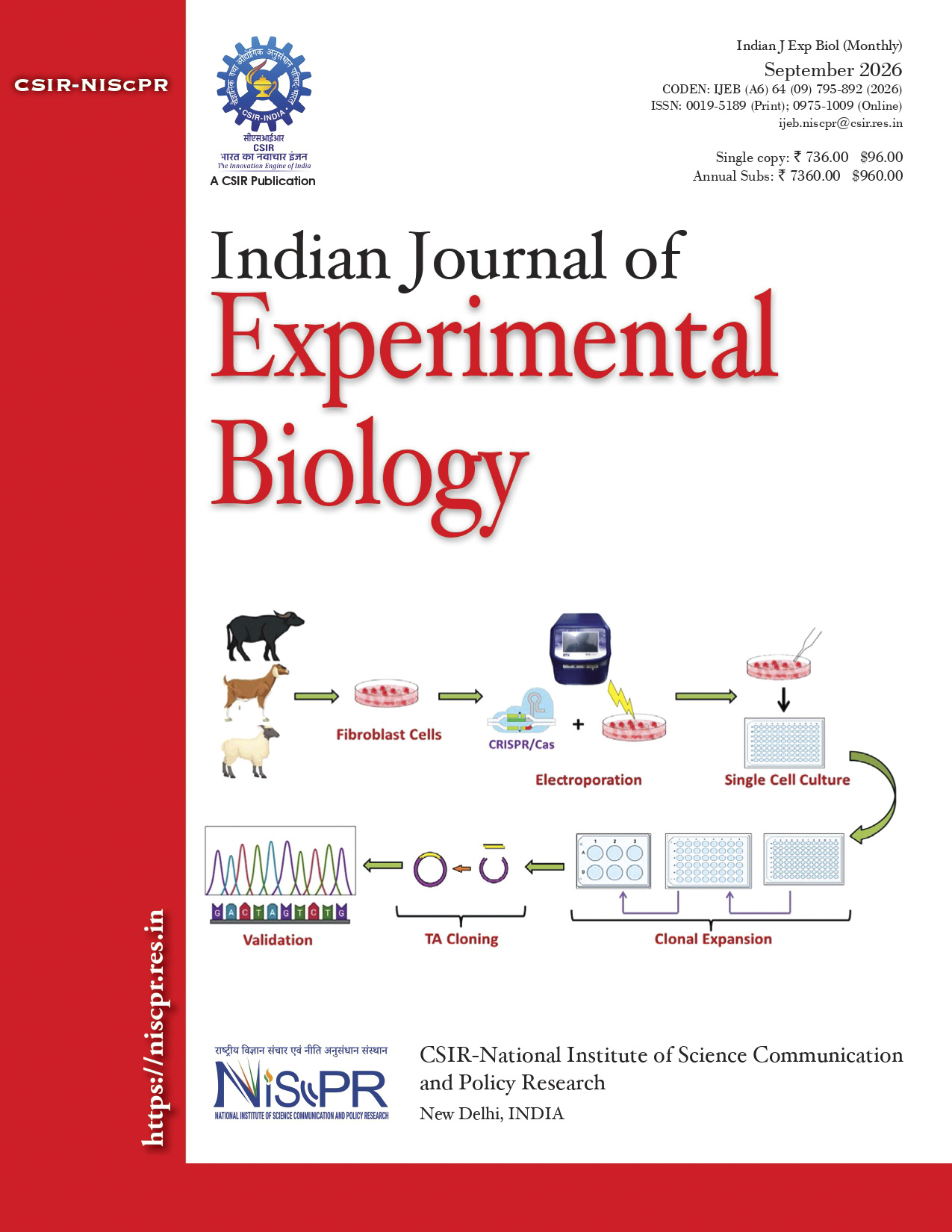
Generation and characterization of MSTN-disrupted fibroblast clones in buffalo, goats, and sheep using CRISPR
SINGH et al.: MSTN GENE-EDITED FIBROBLAST CELL CLONES IN FARM ANIMALS
DOI:
https://doi.org/10.56042/ijeb.v64i09.22627Keywords:
Buffalo, Goats, Sheep, Single-cell clonesAbstract
Myostatin (MSTN) is a negative regulator of muscle growth, whose disruption results in enhanced muscle mass in farm animals. This study utilized CRISPR-based genome editing technology to generate MSTN gene-edited fibroblast cell clones from buffalo, goat, and sheep. The exon 1 of MSTN gene in buffalo, goat, and sheep fibroblast cells was targeted using CRISPR/Cas9. Single-cell clones were isolated using a microscope-guided single-cell picking method and subsequently screened. We successfully established 9, 10, and 12 single-cell-derived colonies from buffalo, goat, and sheep fibroblasts, respectively. We have noted that sheep fibroblasts exhibited the highest cell attachment and proliferation rates (83.67% and 78.04%, respectively), followed by goat and buffalo fibroblasts. Buffalo fibroblasts showed the lowest rates, likely due to species-specific cellular characteristics. Gene-editing efficiency varied among species, with buffalo at 33.33%, goat at 30%, and sheep at 16.67%. The clones exhibited diverse edit types, including homozygous bi-allelic and mono-allelic deletions. Alpha Fold prediction indicated that all alleles contained non-multiple-of-three deletions, which resulted in frame shift mutations and truncated MSTN proteins. This study successfully produced MSTN gene-edited fibroblast cell clones from buffalo, goats, and sheep. These clones hold significant potential for application in somatic cell nuclear transfer to produce MSTN-edited embryos and farm animals.