Protective Effects of Thymoquinone on Behavioral and Biochemical Changes Associated with Diabetic Neuropathic Pain
MENEMENCİOĞLU et al.: THYMOQUINONE’S PROTECTIVE ROLE IN DIABETIC NEUROPATHY
DOI:
https://doi.org/10.56042/ijeb.v64i11.24127Keywords:
Diabetic Neuropathic Pain, Hot Plate, Pregabalin, Tail Flick, ThymoquinoneAbstract
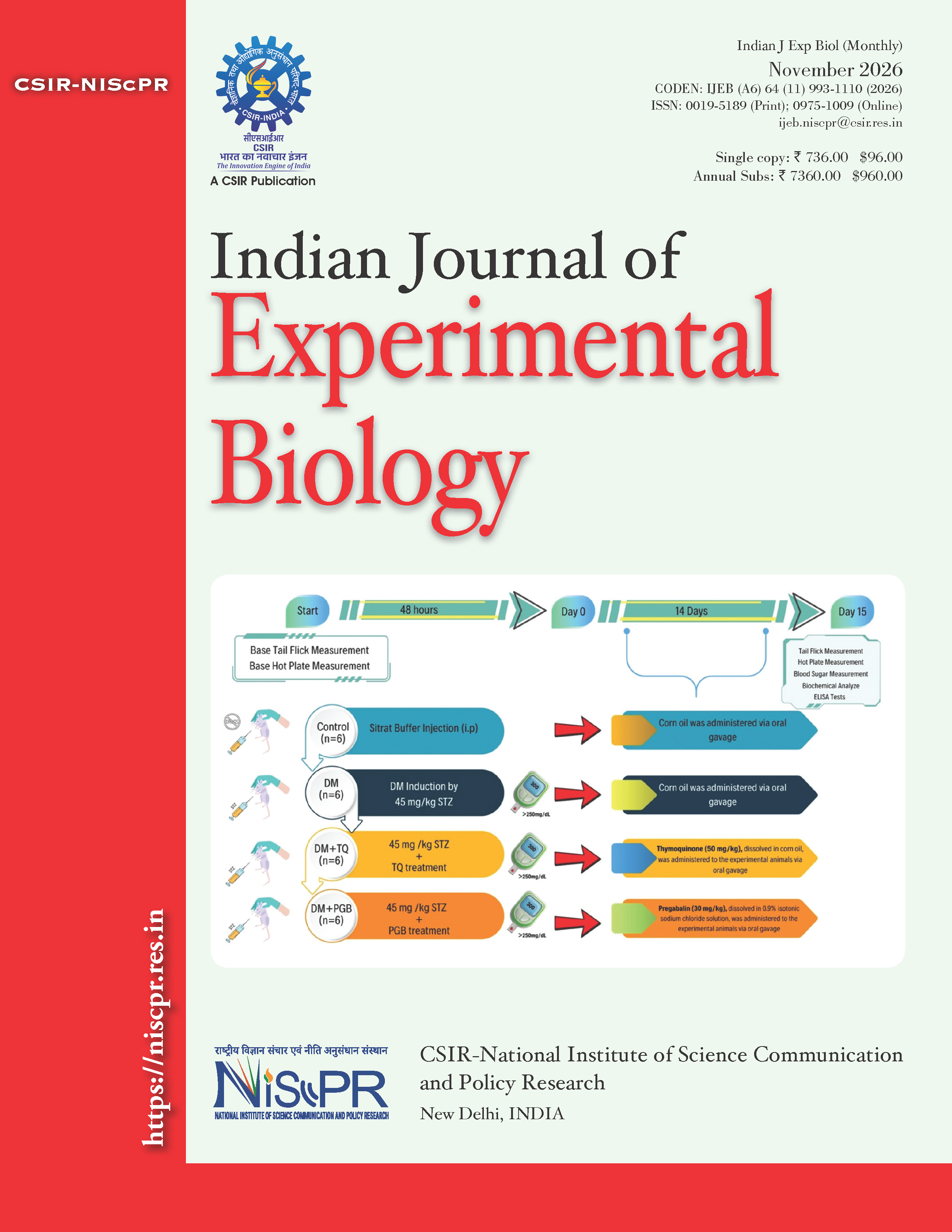
Diabetic neuropathy is a common and debilitating complication of diabetes mellitus, often marked by chronic pain that significantly impairs quality of life. This study aimed to evaluate the protective effects and mechanisms of action of thymoquinone (TQ), a compound with neuroprotective, antioxidant, hypoglycemic, anti-inflammatory, and antinociceptive properties, on behavioral and biochemical changes associated with diabetic neuropathic pain, compared with pregabalin (PGB). Male Wistar Albino rats were randomly divided into four groups: Control, Diabetes, Diabetes + TQ, and Diabetes + PGB. Diabetes was induced using streptozotocin (45 mg/kg, i.p.). The Diabetes + TQ group received 50 mg/kg TQ, and the Diabetes + PGB group received 30 mg/kg PGB via oral gavage for 14 days. Blood glucose levels were monitored, and nociceptive responses were assessed using tail flick and hot plate tests. Serum and tissue samples were analyzed for TNF-ɑ, IL-1β, IL-6, cGMP, TBARS, SOD, and CAT levels. Hot plate and tail flick latencies were significantly reduced in the diabetes group (p<0.05) but were preserved in both treatment groups, indicating delayed onset of neuropathic pain. TNF-α, IL-1β, IL-6, cGMP, and TBARS levels were significantly elevated in diabetic rats and were significantly attenuated following treatment. In contrast, while PGB treatment significantly increased SOD and CAT levels, the improvements observed with TQ treatment did not reach statistical significance. TQ significantly decreased blood glucose levels, and PGB showed a modest reduction. TQ demonstrated comparable efficacy to PGB in alleviating diabetic neuropathic pain, likely through its hypoglycemic, anti-inflammatory, and antinociceptive effects. These findings support TQ as a promising alternative or adjunctive therapy for managing diabetic neuropathic pain.