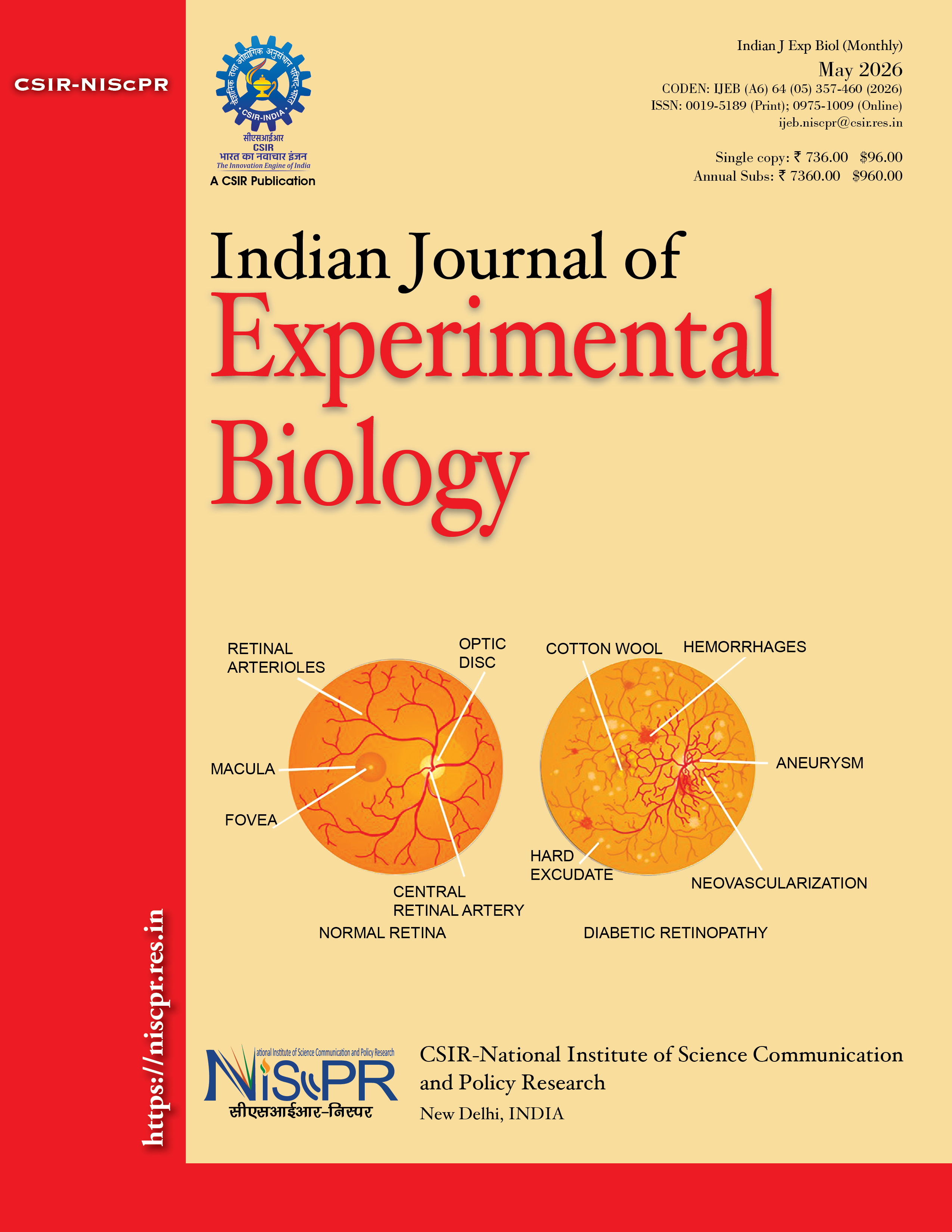
Unraveling diabetic retinopathy: mechanisms, novel targets, and the need for continued innovation
Diabetic retinopathy and novel treatments
DOI:
https://doi.org/10.56042/ijeb.v64i05.21943Keywords:
Microvascular complications, Artificial Intelligence, Blindness, Polyols, SorbitolAbstract
Diabetes is a chronic disease and it is a group of metabolic disorders characterized by elevated levels of blood glucose, which results in microvascular complications. The most frequent consequence of microvascular complications is diabetic retinopathy. The pathophysiology of diabetic retinopathy is multifactorial and is associated with several interdependent mechanisms, involving the interplay between hyperglycemia, hyperlipidemia, hypoxia, reactive oxygen species (ROS), inflammation, and neovascularization. Diabetic retinopathy is largely asymptomatic and, by the time-impaired vision is experienced, the pathology may be significantly advanced from non-proliferative to more severely proliferative, in which the abnormal growth of new vessels occurs. Treatment options for diabetic retinopathy include laser treatment, vitrectomy, and a single or a combination of medications. Artificial intelligence tools and Gene editing are futuristic ways of approaching retinopathy treatment. These treatments and techniques either need the use of anesthesia or long-term hospitalization, or to be injected repeatedly and can cause mild discomfort and systemic side effects. The anti-vascular endothelial growth factor alone or with steroids showed some therapeutic benefits. The treatment for diabetic retinopathy is still challenging. Continuous research and development in this field are crucial to improve outcomes for individuals affected by retinopathy, reducing the burden of this vision-threatening complication of diabetes.