Mitigation of pathological parameters under Jagged1 influence in DMD knockout zebrafish and patient-derived myoblast cultures
DOI:
https://doi.org/10.56042/ijbb.v60i9.3895Keywords:
Duchenne Muscular Dystrophy, Golden retriever muscular dystrophy (GRMD) model, Jagged1 peptide, Myotubes, ZebrafishAbstract
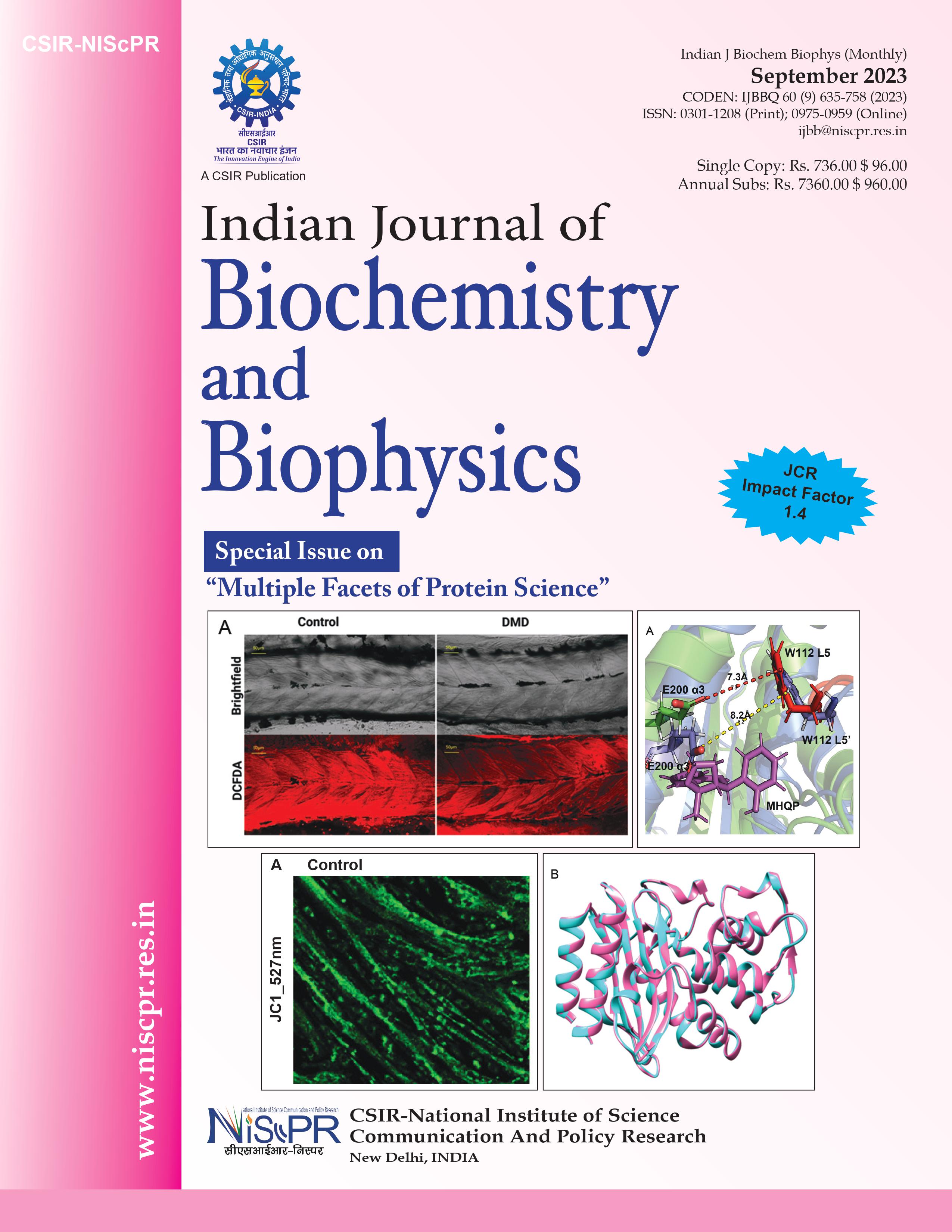
Duchenne muscular dystrophy (DMD) is an X-linked, degenerative disease mainly affecting male children, with progressive weakness of whole-body skeletal muscles and the heart. There is a gradual loss of ambulation, heart weakness, and breathing capacity by late teens. Heart or lung dysfunction causes early death in patients during the second or third decade. Steroid treatment delays disease progression by 2-3 years, albeit with serious side effects. The few FDA-approved gene therapies are mutation-specific and exorbitantly priced. There is an unmet medical need for the children affected with DMD. Interestingly, a previous study showed that single nucleotide change caused Jagged1 overexpression, which resulted in avoidance of early death and ambulatory loss in 1-1.5-year-old golden retriever dogs severely affected with muscular dystrophy. Identifying the pathological processes mitigated by Jagged1 overexpression might help understand the mechanism of this rescue. Hence, we generated DMD knockout in zebrafish, another severe model of DMD with overexpression of the human Jagged1 (JAG1). Pathological aspects like cell death, cell proliferation, cytoplasmic and mitochondrial oxidative stress were compared between dystrophic, rescued, and control groups. Surprisingly, JAG1 increased mitochondrial oxidative stress during rescue, while reducing other pathological processes. Similarly, increased mitochondrial ROS production occurred with Jag1 peptide treatment in in vitro differentiated patient-derived myotubes, suggesting a conserved mechanism involved in the rescue.
Downloads
Published
Issue
Section
License
Copyright (c) 2023 Indian Journal of Biochemistry and Biophysics (IJBB)

This work is licensed under a Creative Commons Attribution 4.0 International License.


