Editorial
DOI:
https://doi.org/10.56042/sd.v9i3.34556Abstract
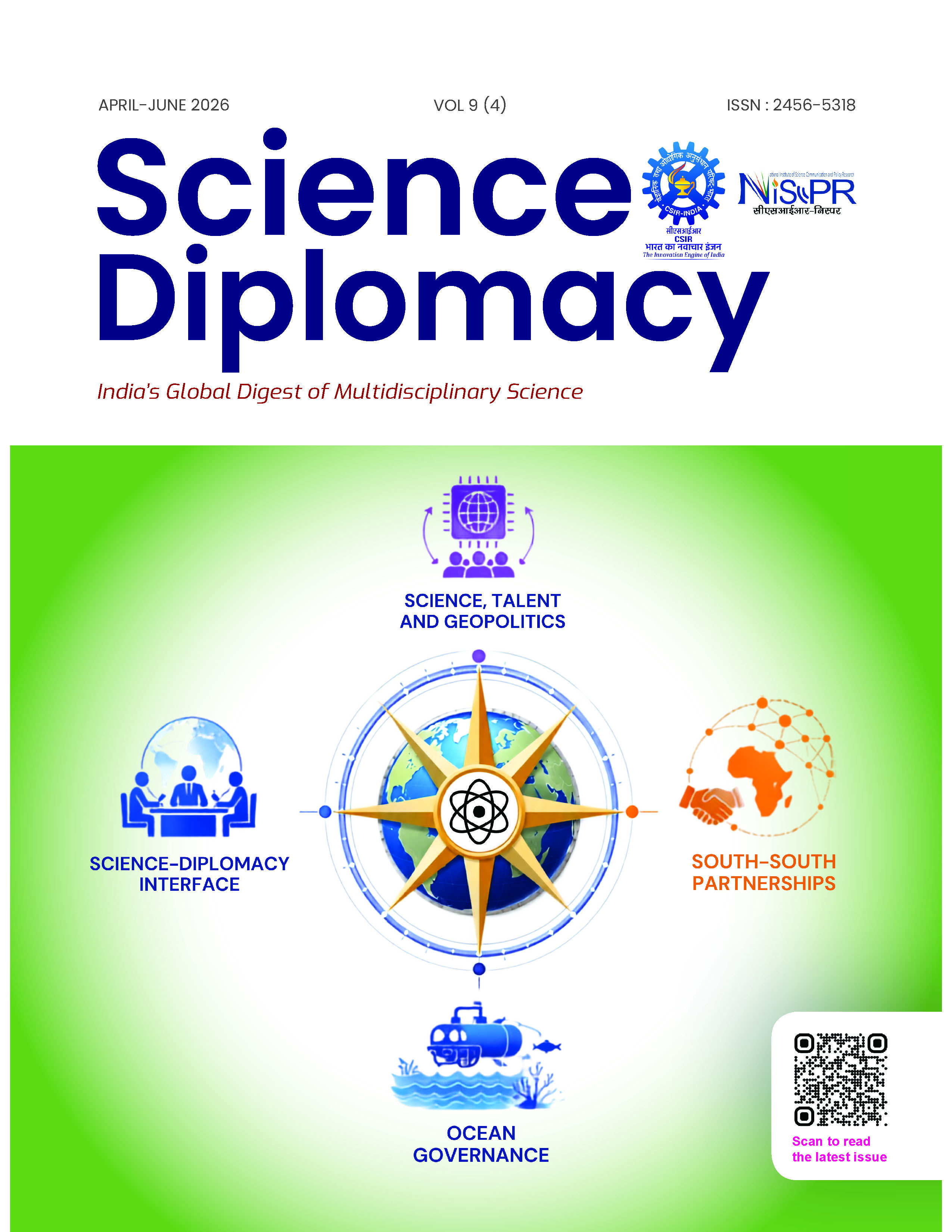
The year 2026 underscores a defining paradox for the global scientific community: deepening geopolitical fractures alongside an urgent need for collective action. Ongoing conflicts, notably the Russia-Ukraine War and the US/Israel-Iran War, have disrupted not only political and economic systems but also the fabric of international scientific collaboration. Research partnerships have slowed or stalled, mobility of scientists has been constrained, and emerging concerns such as energy insecurity and conflict-induced environmental degradation-ranging from pollution to ecosystem damage-have intensified. These developments highlight a critical reality: science can no longer be insulated from geopolitics.

Downloads
Published
2026-10-08
Issue
Section
For Editor Only
How to Cite
(1)
Monika Jaggi. Editorial. SD 2026, 9 (3), 1-2. https://doi.org/10.56042/sd.v9i3.34556.